The Queen of Everything

A very important woman in my life passed away this week. I haven’t blogged in a while for many reasons, but mostly because I wasn’t sure what I wanted to write about. But today, I knew – I wanted to write about Ms. Glenda, my mentor, my friend, my second mother.

Glenda Brown, 1937-2021

Glenda Brown was a force. A beautiful Texas woman who was taught to be a lady by her mother and Miss Eloise of the Beaumont Melody Maids, she was often underestimated by those who thought that what they saw on the outside – big blond curls, false eyelashes, lipstick outlining her mega-watt smile – was all she was.

But Ms. Glenda was smart and savvy. She had vision and grit. She was warm and loving, but she also knew how to establish boundaries – “No, we’re not doing that,” she would say, shaking her index finger with its prettily painted nail at whomever had crossed the line, be it a small child in a ballet class or a colleague in a meeting.

I first met Ms. Glenda when I was 13, in the fall of 1980. She and two other representatives of what was then the Southwestern Regional Ballet Association (now Regional Dance America/Southwest) traveled to Clinton, Oklahoma to evaluate our pre-professional company for admittance into the organization. Glenda made a definite impression on me – I remember her smile and how kind she seemed when she told us we’d been accepted as an intern company. After that, I would see her from afar at the annual Festivals I attended as a dancer; little did I know then how much she would come to impact my life, both through our dance connection and beyond.

In 1987, the National Association of Regional Ballet folded, closing its office in New York City and leaving its five member regions without a central governing organization. Glenda and four other visionaries, including her co-director at Allegro Ballet of Houston, Peggy Girouard, formed Regional Dance America in 1988 to provide a national umbrella to connect and unify the regions and to save the primary national project of NARB, the Craft of Choreography Conference (now the National Choreography Intensive). These five ladies – Glenda, Peggy, Lila Zali, Barbara Crockett, and Cassandra Crowley – took on additional leadership roles beyond those they already had within the pre-professional companies and schools they directed. Glenda herself took the helm of the Choreography Conference for over a decade, overseeing the two-week workshop that brought choreographers and dancers together to explore and create choreography under the tutelage of noted choreographers, music directors, and dance teachers. Eventually, Glenda also became the national board’s President and spearheaded the first-ever National Festival, a week-long extravaganza that brought 100 member companies to Houston in 1997 for classes and performances.

I became a studio owner and the artistic director of Western Oklahoma Ballet Theatre in 1988, when I was only 20 years old. WOBT was by then a performing company in what was becoming RDA/SW. Ms. Glenda, who was the presiding officer of the Southwest region at the time, welcomed me to my new role and helped me navigate within the region as a director rather than a dancer. She taught me about the business side of the organization and in 1991, because of her support, I was elected Secretary of RDA/SW, a leadership position I held for several years before the board enacted term limits. I later served as President from 2008-2011, which I could not have done successfully without Glenda’s example and encouragement.

Ms. Glenda helped me with the artistic side of things, as well. She recommended teachers and choreographers to work with my company. And she encouraged me, as a novice choreographer, to attend the Choreography Conference. Though initially I was very anxious – so much so that I went as an observer before I summoned the courage to go as a choreographer – those two weeks became an annual event for me for several years. I came to relish the time to focus on just being creative, instead of on the million other things I had to think about while running a school and a performing company. And Glenda always put together an amazing faculty, knowledgeable and generous. I soaked everything in like a sponge, and grew in skill and confidence to become an award-winning choreographer. In addition to intense work, it was also a lot of fun, and where I truly got to know Ms. Glenda – eating meals together in the cafeteria or staying up late and chatting about dance…and everything else under the sun.

That was one of Ms. Glenda’s special gifts, making all sorts of occasions, even everyday ones, fun and memorable. In 1995, she and her daughter Vanessa invited me to go on a trip to Destin, Florida with them. An avid traveler, this was one of Glenda’s favorite places – the white sand, the clear water, the memories of camping there when her kids were growing up. I was very excited about seeing Destin, though I was somewhat dreading the long car ride from Houston. However, as always with Glenda, it was an adventure. We veered off I-10 somewhere in East Texas because she saw a sign for homemade tamales that we just had to try. We also got drive-through samples of margaritas, because that was legal (!?!) in Louisiana. We detoured into New Orleans to have red beans and rice with one of her friends. At every stop, she would say “Park it in the shade, daughter!” (something her dad always said to her when she started driving; it has since become a saying in my family too). We sang Frank Sinatra songs, talked, and laughed and laughed – Vanessa, very much like Glenda in many ways, is one of the funniest humans I know. And once we arrived in Destin, the fun continued. Ms. Glenda had us drink apple cider vinegar with honey each morning, because that was her current health potion…but we also had beer for the beach. We got up early to enjoy the sand before it was too hot, and then would go for lunch and a nap or a quick shopping/sightseeing excursion, and then go out to the beach again in the evening before staying up late watching movies and talking and laughing. I remember her serenading us one morning while we drank our apple cider vinegar on the patio. She was in her swimsuit and sarong, and sang a song from her time touring the world with the Melody Maids, complete with all the dance moves, including a lovely hula. This was over 25 years ago, and these memories are clear and delightful, not because anything super exciting or special happened, but because Glenda had such joy for life, an attitude that something fun or wonderful was just around the corner – and it was, because she made it so, whether it was a board meeting, a car trip, or drinking apple cider vinegar.

I think this attitude is one of the things that also made Ms. Glenda one of the strongest women I have ever known – and I come from a line of strong women, so that’s saying something. She was devastated when her husband left her after more than 30 years of marriage – angry, heartbroken, worried about major things like financial stability, but also deeply upset by the disappearance of those little habits developed through living together for so many years, like Dave taking out the trash, putting gas in the car, or bringing her first cup of coffee to her in bed every morning. But she rallied, creating new daily routines and becoming involved in bigger and more exciting professional projects like Young! Tanzsommer (now Stars of Tomorrow), which takes pre-professional companies from the US to Europe to tour and perform each summer. And then, a few years later, when internal politics on the RDA national board led to Glenda being replaced as the director of the Choreography Conference, she pulled herself out of the ashes of that heartbreak – which it was, because she really loved that job – by creating her own Glenda Brown Choreography Project, which provided a forum for her to continue bringing together stellar faculty members to work with young dancers and choreographers. Ms. Glenda was often teased by her business partner Peggy – who was a bit of cynic – about being Pollyanna, the eternal optimist. But it’s that outlook that was the foundation of Glenda being able to move forward after major distress – the sense that better things are out there, that the next adventure is just around the corner.

Ms. Glenda was also compassionate and caring, and if she called you friend that meant something. She was always phoning friends and family members to check up and chat, or to sing Happy Birthday – I still have a voicemail of her singing to me a few years back. She was one of my first calls when my dad died in 1996, and talking to her was like getting a hug over the phone. She told me how sorry she was, how much she knew I loved him, and that it was going to be hard. Her father had been dead for many years at that time, and she told me that she still missed him every day – and she was so right about that grief. She was in Europe when my mom passed away in 2012, but she reached out to let me know she was thinking of me – and later that summer, she pulled me and my boys into her orbit for two weeks at the Glenda Brown Choreography Project to mother and love on us.

Glenda Brown Choreography Project at the University of Missouri at Kansas City, 2012 Charles, Rhys, Glenda, Penny, Walker

This picture was taken there, and Ms. Glenda’s in the middle, pulling off the photo-bomb. She adored my boys, and helped in countless ways to nurture their development as young dancers and young men. When Charles was seven, he told Ms. Glenda that he wanted to go to the Choreography Conference. She told him that he was too young, he had to be 13 to attend as a dancer. He pouted a bit, and she said “I tell you what, come talk to me when you’re 12, and we’ll see what we can do.” We never really talked about it again, but at Festival the year Charles was 12, he asked me to take him to her hotel room because he needed to talk to her. When she answered the door, he said “Ms. Glenda, I’m 12 now. Can I come to the Choreography Conference this year? Remember, you told me to come talk to you when I was 12.” She looked at him seriously, and asked him if he thought he was ready because it was a lot of hard work. Charles, of course, said that he was, and she said “A deal is a deal, so if you think you can handle it, then yes, you can come.” She loved telling that story, and thought it was so funny that he remembered what she had told him at seven and then followed through – but in the actual moment, she treated him like a young professional, which I thought was generous and wonderful. This is how she interacted with all three boys as she provided them various opportunities to study and dance. She also even let Rhys and Walker live with her for the year that they studied at Houston Ballet; they just had to clean up after themselves, take out the trash for her, and guest perform with Allegro Ballet. A few years ago I was chatting with her, and she said “I miss the boys living with me…you know, Rhys would still be up when I’d get home late from the studio, and he’d always eat a fried egg sandwich with me and chat. And it was so nice having them here to take out the damn trash!” She really was a funny lady.

She was also very stylish – although she didn’t spend a ton of money on clothes and didn’t care who knew that. Once, when someone complimented her on her dress, she said “Thank you, I got it for $5 at a garage sale.” But Ms. Glenda also had that special something that made her look great no matter what she was wearing. The same year that Charles first attended the Choreography Conference as a dancer, I was there as a choreographer and my mom and sister brought the twins to visit us. They arrived right before that evening’s showing, and after our initial hugs, I pointed to where Ms. Glenda was so they could go and say hi to her. Walker, seven years old, looked at her and then looked at me and said “Why is she always so fancy?” while moving his hands in little circles by his head. I looked closer – Glenda was wearing shorts, a t-shirt with the neck cut out a la Flashdance, and some flip flops – because it was Texas in July. But her blond curls, the few extra individual false eyelashes she always wore, and her coral lipstick were all there, along with some gold earrings and a necklace. When I told her what Walker had said, Glenda laughed and laughed, and it became another of her favorite stories. It also inspired an impromptu song from the boys and my student Carol several years later while we were on the road to attend the Glenda Brown Choreography Project. We no longer remember all the lines, but here are a couple that we still sing:

Glenda, you are so splenda (sung loudly with emphasis)

She has three eyelashes, only three (whisper-sung with jazz hands, in reference to her false eyelashes; loudly followed by) She’s fancy!

Glenda was absolutely splenda, and her impact in my direction goes even beyond me and the boys. Several of my students were the beneficiaries of her generosity – via scholarships to study, opportunities to teach and choreograph, and knowledge of the dance world. Not to mention that she was such a wonderful example of a life well and fully lived. And we are just one little branch on the Tree of Glenda’s Influence – my timeline on Facebook is flooded with tributes in remembrance – from students, colleagues, long-time friends, traveling companions – each of them with wonderful memories and stories of this fabulous woman.

I once gave her a gift that said “Queen of Everything” on it, which became a thing – for a while, everyone gave her something along those lines. But the moniker was so fitting. Her 83+ years were full of all the best that life has to offer – two daughters and then granddaughters she loved with all her heart, a life in dance that fulfilled her, travel to amazing locales all over the world, good food, good wine, good friends, and tequila. And she relished all of it. When a student and her mom gave me a little “Queen of Everything” plaque a few years ago, I said to them “Thanks, but my friend Glenda actually holds that title, and I will never compare.” And that is the truth.

I am heartbroken that she is gone from our world, mad because she had to fight a terrible disease these last few years, and sad that she didn’t make it a little longer so my plans to visit her in June could have come to fruition. But she lives on in the memories of those who knew and loved her, and I know her light will continue to inspire me to try to be caring and generous, to be an optimist and a visionary, to be strong and find ways to rise up when disappointments and heartbreak occur, and to always look for the next adventure around the corner.

Thank you, Ms. Glenda. I love you.
Art and Revolution (Part 2)

In Part 1, I tracked the historical progression of ballet from its beginnings in the courts of Europe, in order to provide context for my quest to address current concerns of racism and inequality. I know why we are here from a historical perspective, but what else is currently preventing inclusion? And what steps can be taken to remove these blocks to progress, so that we can move faster towards being a diverse and representative art form? To paraphrase author Toni Cade Bambara, what can I do as an artist to make this revolution irresistible?

Beyond ballet’s aristocratic foundation, another obstacle to its diversification is its cost. Academics from Northwestern and Duke published research earlier this year (pre-pandemic) indicating that, in the United States, the average black family with children holds just one cent of wealth, and Latinx families eight cents of wealth, for every dollar of wealth that the average white family with children holds. Native American wealth hasn’t even been measured in the last 20 years, and in 2000 their median net worth was $5,700.

While ballet may no longer be the domain of royalty, training to be a professional dancer is still a fairly elite pastime due to the expenses involved. Beyond lessons at a local studio or school (the cost of which varies depending on such factors as location, faculty, affiliation with a professional company, etc.), students with professional aspirations typically begin intensive summer training programs during their early teens. These can cost several thousand dollars per dancer for tuition, housing, food, and travel each summer. Then there are the tights, leotards, and shoes needed for classes; pointe shoes alone cost around $100 per pair, and they may last only a few weeks. Additional costs can include audition fees, competition or performance fees, and costume fees, not to mention endless supplies of bobby pins, hairspray, and stage makeup. Following high school, ballet dancers don’t typically go straight into a company job; instead they usually have to spend a few years in a professional training program or opt for a university dance program – and neither of those are inexpensive either.

There are scholarships available at all levels, but typically these are for tuition only, and tend to skew in favor of males, since there are far fewer of them in dance. And quite often, scholarships are awarded based on talent rather than actual financial need – and how are talented kids identified for scholarships if they can’t afford to even walk through the door? There are outreach programs available in some communities that provide opportunities for kids from lower socio-economic levels – Misty Copeland’s discovery via a Boys & Girls Club dance program is a well-known example – but the high costs involved in professional ballet training mean that only a few, extraordinarily talented, students will have those expenses covered by an organization or a donor for an extended period of time.

That brings me to the current model in the U.S. for non-profit arts funding. Due to limited government support – the National Endowment for the Arts has never been allocated more than $175 million (and that in 1992; 2019’s allocation was $155 million) – arts organizations rely heavily on private donations for funding. Any person or entity giving large amounts of money has some power and influence over how their donation is used, and if they aren’t happy with some aspect of the organization, can threaten to withdraw their financial support. On the earned income side of the equation, it’s about programming that will bring in large, paying audiences. This is why every ballet company does The Nutcracker each year, regardless of its obvious cultural insensitivities; it is the best-selling production of the season, by far, for everyone. So, overall, this rather shaky revenue dynamic lends itself to artistic choices that typically are not revolutionary or high-risk – thus it’s 2015 before Misty Copeland dances the role of the Swan Queen in American Ballet Theatre’s Swan Lake and it’s 2019 before New York City Ballet casts a black Clara in The Nutcracker.

Solving the money part of this equation in our unequal society will not be easy, although I think this moment in time provides us with an opportunity to rethink our country’s priorities and make a push for significant changes. Just as defunding the police and reallocating some of those resources into social services more appropriate to the needs of our communities and citizens has become a possibility that we are now willing to consider and discuss, perhaps artists should be taking this time – especially since the performing arts are being hit particularly hard by this virus – to lobby for what some might consider radical policy changes, such as reallocating resources to provide much more government funding for the arts, which pours billions of dollars into the country’s economy each year; such as providing living wages and guaranteed basic income for all.

I’ve heard the argument that classical ballet is dying, and I’m sure there are people that think it should, from the perspective of dismantling racist systems. But because I love the art form, and believe that dance, in all its genres, can be a unifying force, I’d like to see it continue to evolve. But, if ballet is to stay relevant, it’s going to have to progress faster. Information moves extremely quickly now in our technologically-advanced world, which causes societal shifts to happen ever more rapidly. Ballet cannot take a century to transform into its next iteration – our artists and leaders must take this opportunity now to pursue the revolutionary choices needed to make ballet more representative and inclusive. The ballet stage needs to be seen as a diverse space, not a white space with the occasional outlier. Ballet should start telling more stories about people of color, so that black and brown dancers can dance in representation, not in assimilation. Traditional expectations must be upended to create new ones.

If I am asking for revolutionary choices from others in my field, I must ask it of myself as well. But, I feel that my sphere of influence is very small – I don’t currently have a major organization I’m involved with, or a leadership title, or a performance platform to provide my words and my work with far-reaching legitimacy. However, I do have almost 50 years of experience in the dance world, and interestingly, my corner of it has mostly been somewhat diverse and inclusive:

  • I grew up in Western Oklahoma dancing with two other girls my age that were pretty serious about ballet; one was African American and the other was Native American, and we were the only three in our class to dance all the way through high school together.
  • Our teacher, Candace Jones Smalley, cast a black Clara in her Nutcracker, in 1983.
  • When I was the owner/director of the studio, I worked with a local educator that had started an after-school tutoring program for disadvantaged, primarily black, children in our small town to establish a scholarship program for interested students to attend ballet lessons. The first few years, I fully funded it myself – waiving tuition and providing uniforms for between 6-10 students each year – until we found a sponsor to cover the dance attire. Three of these young dancers ended up becoming company members of Western Oklahoma Ballet Theatre, one of them the Snow Queen in my Nutcracker.
  • I taught ballet for AileyCamp New York for three years, working with 100 black and brown – and talented – students each summer, along with a diverse, amazing teaching staff.
  • When I worked for Oklahoma City Ballet, its outreach programs through the Boys and Girls Club and the public schools helped identify disadvantaged students to train at the school on scholarship. There were also dancers of color (albeit all male) in the professional company, including a Principal Dancer.

Until recently, I hadn’t stopped to think how unusual these experiences, particularly the early ones, were. But reflecting on them has helped me understand that maybe my contributions to this revolution don’t have to be grand and majestic, they just have to be in service to my ideals:

  • I can voice my belief that the ballet world is capable of embracing diversity, in both its dancers and its artistic content.
  • I can look for and create opportunities to expand inclusion and representation for people of color in ballet.
  • I can model anti-racist, inclusionary behavior so that every space I am in is seen as a safe and supportive environment.
  • I can use my skills as a teacher to help all students – regardless of skin color or background or professional aspirations – learn this challenging art form and express themselves through it.
  • I can use my writing to try and persuade others to join me in identifying their own ways to make this revolution irresistible.

We have seen ballet evolve, influenced by other revolutions and changing societal norms. I am hopeful it has the capacity to do so again…and hope, I think, is a necessary ingredient for a successful revolution. Hope, and artists that make revolution irresistible.

Art and Revolution (Part 1)

I’ve been doing a lot of thinking in the past three-plus months about my life as an artist. I’ve been reflecting a lot on my past adventures, some of which I’ve shared through stories in this blog. More, I’ve been wondering where my artistic life is going and what it will look like, due to the pandemic and its affects on the performing arts – when will it be safe for dancers to gather in a room to sweat and breathe and move through space with other dancers? And when it is safe, will there be a place for me?

But most recently, in the wake of George Floyd’s murder and the re-energized push for anti-racism in all areas of our lives, I’ve been pondering how I can effect positive change in and through an art form that was born of an aristocratic, oppressive, and racist system.

This past week, I came across a quote from the writer Toni Cade Bambara: “The role of the artist is to make revolution irresistible.” And as I began to think about how dance, specifically ballet, can be utilized to address the issues of racism and inequality, I realized we first must figure out how to make this particular revolution irresistible within the art form itself, irresistible to the decision-makers in ballet – ironically many of whom are actually artists themselves.

Classical ballet has survived political revolutions, and evolved because of them. Interestingly, France and Russia were each the center of the ballet world at the time their respective revolutions arrived. And the art form had to change in order to adapt to new realities. Ballet arose through the courts of France and was initially a reflection of royal etiquette and social control, and something in which only those (primarily male) of noble birth could participate. Following the French Revolution, the art form shifted to a slightly more egalitarian approach, and saw the rise of the ballerina through the continued development of pointe work. However, the ballerina typically represented something otherworldly – a Wili, a Sylph, a Swan, a fairytale Princess – a romanticized version of woman.

The Russian Revolution scattered dancers all over Europe, and eventually to the United States via the various Ballets Russes touring companies. Sergei Diaghilev and his Ballets Russes (1909-1929) embodied a bold collaborative approach to creating ballets, commissioning composers such as Igor Stravinsky and artists such as Henri Matisse to work with young choreographers such as Vaslav Nijinksy and George Balanchine. When this creative model eventually made its way to the expansive shores of America – during and following the tumult of two World Wars – ballet had begun to expand its boundaries, both in choreographic movement choices and in subject matter.

Balanchine’s neoclassicism stretched the traditional classical vocabulary along with the look of a ballet performance – no costumes!?! – taking the art form into the realm of abstraction. Simultaneously, other 20th century choreographers began making ballets about real people, with worldly problems and issues…albeit primarily reflective of white people.

The art form has since moved steadily towards an embrace of contemporary movement styles, and within that framework, there are the occasional works of choreography that address inequities and inequalities. But mostly it’s modern and contemporary companies showcasing this type of work; ballet companies usually don’t select contemporary works that have a social agenda.

And even though there are now prominent black dancers in many ballet companies, the art form is still very white. Just last year, it was newsworthy that New York City Ballet cast its first black Clara in its famed Balanchine Nutcracker. Typically, dancers of Asian and Latin descent – and black dancers with lighter-skin – get more opportunities in classical companies than those with darker skin. This speaks not only to the standard of having a uniform look within the corps de ballet, but more revealingly to the ingrained expectation that ballet’s stage is a white space.

Any exceptions to that expectation – Arthur Mitchell’s Dance Theatre of Harlem, for example – aren’t truly exceptions, because its very premise is that it is a company of primarily black dancers. So, either a space is created specifically for black dancers or the space is considered white and a dark-skinned dancer may be allowed to inhabit it briefly.

In tracking this progression – and it has been a progression, although extremely slow and absolutely incomplete – we see that ballet, even with its elitist DNA and its Eurocentric aesthetic, has not been able to live in an ivory tower, untouched by the forces of the world. It has not been immune to political and cultural shifts, but rather has adapted – haltingly, to be sure – to new realities. So, how to continue, maybe even speed up the journey? Back to my original question – how do we make this revolution irresistible?

As always, there are multiple roadblocks to inclusivity. Beyond an understanding of the historical foundations and developments of ballet, what else keeps the art form from diversifying? I think one of the most important answers to that question involves financial considerations. Ballet is expensive – both to train for as a dancer and to produce as an organization. I’ll be looking at that in more depth in my next post.

Black Lives Matter

I haven’t written for a few weeks. At first it was because I was a little busier – some consulting work had come my way, I was laying some groundwork for future projects, and continuing to teach a few classes via Zoom. Then, just as I was starting to contemplate a new post, the George Floyd video hit and the world felt so heavy. My words seemed exceptionally inadequate, woefully inexpressive of all the emotions that were roiling within me.

I was already upset about Ahmaud Arbery and Breonna Taylor when I saw the story of a white woman calling 911 and blatantly lying because a black man politely asked her to leash her dog. That was followed almost immediately by the horrific footage of a white policeman with his knee on the neck of a restrained black man. On camera. Acting as if it was normal. For nine minutes.

But wait…I was already upset about Stephon Clark, Terrance Crutcher, Alton Sterling, Philando Castile, Sandra Bland, Freddie Gray, Tamir Rice, Michael Brown, Eric Garner, Trayvon Martin…

But wait…I was already upset because my black friends have to teach their children – especially their boys – abundantly cautious ways of maneuvering in our society, such as keeping their hands visible at all times in interactions with police…such as holding back anger at racist treatment in order to make sure situations don’t escalate…such as not wearing hoodies…

But wait…I was already upset because the policies, laws, and institutions in our country have been established based on the ideology of white superiority….

And if I am this angry and upset about all of this, from my privileged vantage point, then how much more magnified must it be for those for whom none of this is just a news story, but instead is a daily reality? When every public space is assumed to be for white people? When one is never assumed innocent? When fear is someone’s first reaction, or at least that’s the story they tell to try and excuse inexcusable behavior?

As the protests started to build across the nation and then the world, and over and over again policemen were caught brutalizing human beings, I was struck by how vastly different these protesters were treated in contrast to those – mostly white and often armed – who had protested the pandemic shut-downs just a few weeks earlier. Comparing the footage, the racism is nauseatingly blatant. The Black Lives Matter protests had law enforcement in riot gear, police SUVs driving into crowds, tear gas and pepper spray and rubber bullets being aimed indiscriminately at people, police yanking people from their vehicles and beating them with their batons. The footage from the re-open protests showed men, without masks but with guns, screaming directly into the faces of the police, who stoically stood there without responding – no tear gas, no rubber bullets, no batons.

Violence perpetrated on black bodies with impunity – this has been the reality in our country for over 400 years. And it’s only one way the underlying doctrine of white supremacy is played out on a daily basis. Understanding how this ideology – that white is somehow better, more deserving, more valuable – permeates our institutions, our laws, and our attitudes is vital to making lasting change, to dismantling the structural racism that has been built into the very fabric of our everyday lives.

I have been trying to figure out how to appropriately express how I feel about all this without seeming as if I was trying to speak for black people when it is their perspectives, their stories, their experiences that we should be listening to in this fight. But I also know that “white silence” is harmful. So, I’ve been reflecting and reading, looking at society as a whole and at my corner of the arts world, re-examining my privilege and my biases. From there, I began to come up with a list of tangible actions I could perform in pursuit of a more equal and just society.

I can share my anger and grief at the state of the world, adding my voice to the chorus of those clamoring for change.

I can reaffirm that I am an ally.

I can continue to call out racism when I see it.

I can continue to educate myself in ways to be anti-racist, and support organizations doing that work.

I can amplify black voices and achievements.

I hope you will consider making your own list, and join the fight.

Dance Family

The title above may lead you to think I’m going to be sharing thoughts specific to my nuclear family, but I am actually going to venture into the topic in a more encompassing way for this post.

I’ve been thinking a lot about “dance family” over the past few, somewhat difficult, months – about how generous and supportive and caring it is. This has been evidenced for me personally through emails and texts, phone conversations and Zoom hangouts, comments and messages on Facebook and Instagram – each interaction reminding me that I am loved and that I have made a positive impact through my work in dance.

It has also been on display in a broader sense during the pandemic, with the plethora of online classes that teachers, dancers, and companies have made available because studios are closed; with streaming content being generously offered to a world where gathering for live performances is not currently safe; and with fundraisers such as this one organized by Misty Copeland featuring 32 ballerinas from around the world. It’s even being demonstrated through the creative pandemic-specific content being made that runs the gamut from moving to hysterically funny.

I was talking to my friend Cam last week about what it’s like running a ballet school. He works in marketing, and he picked the dance family motif out of our conversation in a very perceptive way, noting that it seems important from a couple of different perspectives in an endeavor such as a school: first, families with children are the primary clientele of a ballet school, the focus of initial messaging and marketing; and then the school itself BECOMES its own family, of students and teachers and parents. He was able to distill from our chat how important creating that sense of family is to me, although I never said those words specifically.

There are many variations to the saying that family isn’t necessarily about being related, but instead is about the people you love and who love you back. For me, this is most clearly illustrated by my three godsons, who ARE my kids – not in any biological or legal sense, but because I love them and have cared for them, and have chosen to be there for them, and they, in turn, for me. But it’s also illustrated by my dance family – of which the boys are also a part – made up of those students, parents, and colleagues whom I have worked with so closely that they too became people I loved, who loved me back.

The training process, the creative process, and the rehearsal process for dance are communal experiences – humans gathered in a space, working together on a project, unified in a common goal – and it’s this social aspect that I believe is the mechanism for the feeling of “family” that develops. There is laughter and there are frustrations. There are different personalities, different levels of understanding, and different approaches to the work. But bringing all that into a shared space and experience molds the group into a unit, a team…a family. I’ve seen it happen with a group of students in a ballet class, and I’ve seen it in performing companies at both the pre-professional and professional levels. I’ve also seen it in the ballet schools I’ve led – parents providing the opportunity for their children to experience dance, teachers nurturing and educating their students, and everyone coming together to celebrate their growth and accomplishments, in dance and beyond.

I attended the virtual commencement last week of Luke, a former student of mine. After high school he danced in the second companies of both Tulsa Ballet and Nashville Ballet, along with some modern companies, before deciding to pursue a BFA in Photography at Parsons School of Design in New York City. Luke was a speaker during the commencement, as a senior representative, and I was immensely proud of him as he spoke eloquently and confidently about the journey and obstacles he and his classmates overcame to finish their senior year in a way no one anticipated. Over the weekend, Luke texted me, thanking me for attending the commencement. During our conversation he mentioned that there was a silver lining in going virtual for the commencement, in that people who probably wouldn’t have been able to attend a normal ceremony in-person had been able to tune in to the livestream. He added “Everyone has played such an important role in me being here.” And though I have not been a part of his day-to-day life for nearly ten years, I knew this was his acknowledgment of my support and love, and a testament to the enduring bonds of our relationship, forged through dance.

Another of our dance family is Luke’s best friend, my former student Madeline, who also now lives in New York City and whom Luke was visiting when he made the decision to apply to Parsons. She was the one who instigated an Instagram “parade” for Luke last week – a “Gradstagram” – following his commencement, asking friends and family to post photos of Luke to help him celebrate…just as he was on hand to help her celebrate her wedding last year. But grand occasions aren’t the only ways these two support each other – they’ve also seen each other through headaches and heartaches, and all the silly dramas that life throws at each of us.

Because that’s what your family does – supports and celebrates you on occasions both grand and ordinary. Reminds you that you can overcome whatever obstacle might currently be in your path, even if it’s the loss of your job in an unprecedented pandemic. Tells you that you matter, and that you are loved.

To my entire dance family – thank you.

Energy Makes Energy

My first summer intensive experience was the Oklahoma Summer Arts Institute, a two-week auditioned program for Oklahoma teenagers involved in the arts. It is held at Quartz Mountain State Park in southwestern Oklahoma each June, and is a hybrid of summer intensive and summer camp. While now they have pavilions that house the various disciplines, and a lovely performance space, when I attended it was still a fairly young program and the set-up for classes was very much a “make it work” type of situation.

The hub of the activities was the lodge, which consisted of a hotel, restaurant, gift shop, indoor swimming pool, and meeting rooms. Students didn’t stay in the hotel with faculty and staff; we were housed in cabins and group camp buildings located some distance away, with camp counselors as chaperones. Each morning, we were bused in, as all meals and most classes took place either in or near the lodge. The artistic disciplines when I attended included acting, mime, writing, photography, visual arts, orchestra, ballet, and modern dance.

The days were long. Mornings and afternoons were spent studying your discipline, and then in the evenings there were activities and events that everyone attended so they could learn about other art forms. Wednesday and Saturday of both weeks, there were orchestra concerts. Other nights there were a couple of options that we could choose between. Guest artists or faculty members would speak or perform, and sometimes, the students might also be involved in a lecture-demo of some sort.

This exposure to many different art forms and types of artists is what makes OSAI different from a traditional dance intensive, where the focus is only on one thing. As a teen developing my identity and voice, this exposure encouraged me to look beyond my own art form for inspiration and ways to know and understand the world. Through conversations with peers who were musicians, actors, writers, painters, I came to realize that my “tribe” was much larger than I had previously known, and consisted of more than just dancers.

My first summer, when I was 13, I was selected to attend OSAI in modern dance. Our “studio” was the tennis court – net removed, a sprung(ish) floor laid out, and a tent-top erected over the flooring to provide shade. The weather was bearable first thing in the morning when class started, but by afternoon the heat could be brutal. I remember being very jealous of the ballet dancers, because their classroom space was inside, atop the covered swimming pool.

That year there were also a lot of thunderstorms that would come through in the afternoons that prevented us from dancing outside. There wasn’t an alternate space on-site, so a few times we were bused to a nearby town so we could use their high school gymnasium. I was given a solo in the choreography for the final performance, and I actually learned the majority of it in the lodge’s narrow hotel hallway because of bad weather.

The modern dance teacher that summer was Nora Guthrie, daughter of Woody and sister of Arlo. There were several from my home studio attending OSAI that year, some in modern and some in ballet, and the ballet teacher was Georgina Parkinson from the Royal Ballet, at that time a ballet mistress with American Ballet Theatre – elegant and imperious, with a crisp British accent. By contrast, Nora was earthy, with a quick bird-like way of moving…and also imperious. (It might be a dance teacher trait.) She was a great teacher. I hadn’t really had any formal modern dance training at that time, but she was so clear with her instructions and expectations that I very quickly felt like I understood the concepts and ideas that she was imparting. Her choreography was cool and interesting, and she made it feel completely organic to me.

The aforementioned long days meant that mornings were difficult – everyone was tired and sore, so getting going at the beginning of class was somewhat of a chore. The aforementioned weather disturbances meant that afternoons were also difficult – either it was so hot in our outdoor studio that our muscles seemed to melt in lethargy, or storms had us traveling to an alternate location, the bus spitting us out completely distracted, with cold, stiff muscles. From a teacher/choreographer perspective, these are definitely not ideal circumstances either, and I’m sure that Nora was hot, sore, tired, and distracted as well. But she never let on, and continued in her demanding, yet positive way, to push us to learn, to dance bigger and better…and she choreographed a solo in a hallway.

As you can tell, I have a lot of memories from this first formative experience, but one of the most important lessons I learned from Nora Guthrie was when she said this, one morning class when everyone was tired and moving slow: “Energy makes energy. When you are tired, make the decision to take your first step with as much energy as you have, and you’ll find that each step after that becomes easier, because….Energy. Makes. Energy.”

We all discovered it was true that morning. And I have spoken these words to my own students…and reminded myself of their importance, as well…more times than I can count in the intervening years.

Please Do This Good

I have been fortunate to have taught a lot of really hilarious kids, so today I thought I’d share a collection of funny student stories. This batch is circa 2005-2008, in no particular order.

~~We were prepping for a performance at a small school theater that had several signs displayed noting that the use of tobacco was prohibited, new additions since we had last been there. The signs were hung in multiple prominent places and very stern. The company dancers were all on stage getting ready for warm-up class, and one of the kids said something (I no longer remember what) in a very bossy and adamant fashion. Rhys commented in response “So, put that in your pipe and smoke it.” A beat went by and then he added “Outside.”

~~In 2008 we did a condensed version of Sleeping Beauty, with Luke as the Prince and Carol as the Lilac Fairy. I was teaching the two of them the Act II Vision Scene, in which the Lilac Fairy comes to the Prince and asks him, in pantomime, why he is melancholy. When he responds that he doesn’t really know why, she says to him that he needs to find his love and then she shows him a vision of Aurora. We were referencing a Royal Ballet video to clarify some of the pantomime, and in that production the ballerina dancing as the Lilac Fairy placed her hands interestingly under her bosom to reference “love.” When I then had the kids talk through their pantomime conversation, as they marked the gestures, when Luke said he didn’t know why he was sad, Carol said aloud as she pointed to him “You,” and then, as she mimicked the Royal Ballet ballerina, “need a boob.”

~~We were at a Regional Dance America/Southwest Festival in Dallas, and the company was preparing to perform one evening. The work was a contemporary pointe ballet, choreographed by Charles, then in his first season with Kansas City Ballet. In rehearsals, he and I both had been coaching the kids on bringing fierceness and confidence to their performance. The cast circled up backstage for a pre-performance prayer led by Charissa, one of the dancers. She began “Dear God, please make us sexy.” Then she stopped and said “Wait, can we ask that?”

~~Carol was over, hanging out with my boys, and we were watching The Lion, The Witch, and The Wardrobe (the old PBS version) in preparation for me turning it into a ballet later that spring. We had performed Peter & The Wolf the previous fall, so when discussing the various characters in the Narnia story and Peter came up, Carol said “Why is there always a Peter?” I said “There isn’t a Peter in Nutcracker.” And she replied “You don’t know…maybe that Arabian chap is named Peter.”

~~Charles was working on a piece of choreography for the company, and everyone had just taken a break. As they were getting back to work, Charles said “Madeline, how are you?” She turned to him and said “I’m fine.” He laughed and said, “No, how ARE you?” She looked at him in a slightly confused manner, and I said “He means in the choreography, what was the last thing you did?” Her eyes widened. “Ohhhh,” she said, cracking us all up.

~~We were in rehearsal, and I was giving notes following a run-through. I was going down my messily scribbled list, marking things off as I conveyed them to the dancers. I then came to a “P” – that’s all that was written, just the letter “P.” I tried to remember what it might be referring to, but couldn’t, so I continued on, giving the rest of the notes. Then I went back, and asked the kids if they had any ideas for what the “P” note might be, given the two notes that were on either side of it. No one could come up with anything that sparked a memory in me for what the note might be, so I said, “Okay, let’s run it again, and if I see it, I’ll try to write a better note.” The dancers were on their way to their starting spots when suddenly Madeline turned around and said excitedly “I know what the ‘P’ is for!”

“What?” I asked.

“It stands for Please do this good,” she deadpanned.

That was our motto from then on, grammatical incorrectness and all.

Balanchine’s Apollo

New York City Ballet is currently presenting a Digital Spring Season, twice a week making certain performances available to view for 72 hours: https://www.nycballet.com. So far, they’ve shown George Balanchine’s Allegro Brilliante, Justin Peck’s most recent work, Rotunda, and most recently Balanchine’s Apollo, one of my all-time favorite ballets.

Created in 1928 for Serge Diaghilev’s Ballet Russes, when Balanchine was a mere 24 years old, Apollo is a short ballet to music by Igor Stravinsky. Stravinsky had been commissioned by the Library of Congress in 1927 to write the ballet for a festival in April 1928; the requirements included only six dancers, a small orchestra, and no more than 30 minutes, but the choice of subject was left to him. Stravinsky decided to make Apollo the central figure, and devised a scenario involving the birth of Apollo, his interactions with three Muses – Calliope, the Muse of poetry; Polyhymnia, the Muse of mime; and Terpsichore, the Muse of dance and song – and Apollo’s ascent as a god to Mount Parnassus. For the 1928 premiere in Washington, D.C., Apollon musagète was choreographed by Adolph Bolm, who also danced the title role. Stravinsky apparently took no notice of this original choreography, and it has been lost.

Stravinsky had reserved the European rights to the score for Diaghilev, who gave the project to Balanchine. This was the first major Stravinsky work for the young choreographer, kicking off one of the most successful artistic collaborations of the 20th century. Classical ballet was Balanchine’s vocabulary, but in this masterpiece we see some of the first introductions of what would become his signature neoclassical style – flexed wrists and feet, parallel legs, positions stretched to extremes or slightly off-balance. Balanchine’s Apollon musagète premiered in Paris in June 1928 with Serge Lifar as Apollo and Stravinsky conducting, and it can be clearly marked as the work that sent ballet in a new direction.

The ballet was first performed in the United States by American Ballet Theatre in 1943, and then Balanchine brought it into the repertory of his New York City Ballet in 1951. During the 1950’s, he shortened the title to Apollo, and the ballet has remained in NYCB’s repertory, with such dancers as Jacques d’Amboise, Edward Villella, Peter Martins, Ib Andersen, Nikolaj Hübbe, and Robert Fairchild performing the title role. In 1979, Balanchine reworked the ballet for Mikhail Baryshnikov during Baryshnikov’s stint with NYCB, eliminating the opening birth scene and somewhat controversially changing the ending. Instead of climbing the stairs to Mount Parnassus, the new ending has Apollo and the three Muses creating a lovely tableau that originally was seen in a different place in the ballet; there is much debate among ballet lovers about which ending is better. The original version, including the birth, is still performed by some companies – I saw Kansas City Ballet do it about 10 years ago – but NYCB presents the pared-down version that was in place when Balanchine died in 1983. That’s the version the company made available this week, with the debut performance of Taylor Stanley as Apollo from 2019.

Balanchine’s Apollo is full of imagery, and the choreography clearly delineates each character. Apollo’s first variation shows his youth and uncertainty. In contrast, his second variation, following his education by the Muses, shows him confidently stepping into his power. Throughout the ballet Balanchine reflects a multitude of ideas and visual inspirations, including games, chariots, flashing lights, birds, and a reference to Michelangelo’s Creation of Adam, when Terpsichore and Apollo touch extended index fingers. Here is a link to an article by New York Times critic Alistair Macaulay that takes a look at the way Balanchine taught the role to his various Apollo’s, and what this signature work meant to the acclaimed choreographer: https://www.nytimes.com/2019/01/15/arts/dance/balanchine-apollo-new-york-city-ballet.html

I enjoyed the digital release of the ballet this week – well-danced for the most part, and it was nice to see Mr. Stanley’s debut performance. However, my favorite video version is one that ABT did for a Dance in America program in 1989 with Baryshnikov as Apollo: https://www.youtube.com/watch?v=XNSsYLxa5d8. Christine Dunham is Terpsichore, Leslie Browne is Polyhymnia, and Stephanie Saland (guesting from NYCB) is Calliope, and all three are lovely, but it’s Baryshnikov (in black tights, unusual for this ballet) that commands attention. His flawless technique and mature artistry combine beautifully to depict Apollo’s transformation through the Muse’s artistic instruction.

If you do watch this version, during the opening interview with Baryshnikov you’ll also be treated to some images from the original production in 1928. The women wore white tutus, eventually pared down to simple white leotards and skirts in 1957; similarly, the scenery was stripped down through the years as well, as Balanchine’s neoclassicism took on a certain “look” – dancers in practice clothes, minimal scenery, the essentials only.

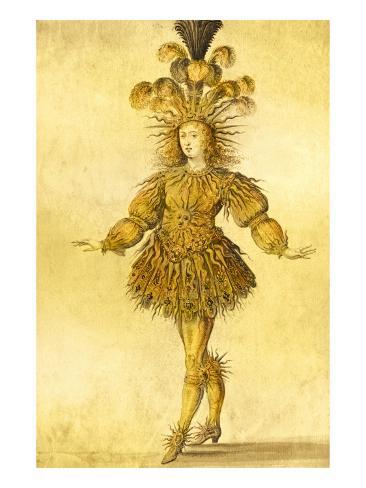
Apollo has often been the inspiration for works of art. This god of music, dance, poetry, truth, light, and the Sun, represents the ideal of kouros – beautiful athletic youth – so ballet seems a fitting place for him. King Louis XIV of France – who established the Academie Royale de Danse in 1661 which led to ballet becoming a codified art form – was nicknamed the Sun King because he once danced in a ballet as Apollo wearing a magnificently elaborate golden tunic.

The contrasts between the excessive embellishments for King Louis’ Apollo and Balanchine’s much simpler version some 270 years later are interesting and speak to many developments in both ballet and human history. All of that is beyond the scope of this post, but watching Balanchine’s masterpiece, this amazing slice of ballet history in and of itself, is an awesome way to spend 30 minutes of quarantine life and I highly recommend it.

Penny Power

A student of mine, Sophia, gave this moniker to a mindset that she attributes to me. She described it to her mom, Teake, about a year ago in this way: Miss Penny can do anything, and she also believes her students can do anything, and if they keep working at it, they will get it. She also said that this phrase, Penny Power, gets her through many things in life.

When Teake first shared this story, my favorite aspect was that Sophia really felt, as a student, how much I do believe in my students. It also reminded me of a message I received several years ago from a former student of mine, Britton (now a mechanical engineer, wife, and mother). She relayed that she had taken a martial arts class, and afterwards the instructor asked her how much experience she had. When she mentioned that this was her first class, he was quite impressed. Britton told him “Well, I grew up dancing, and my ballet teacher always said Ballet dancers can do anything.” She went on to tell me that she just wanted to let me know that I was right.

I do believe that dedicated ballet training imparts an impressive array of tools with which to approach life, and not only in a kinesthetic, movement sense. There is the discipline gained from hard work and high expectations, and the poise and confidence necessary to perform at a high level in front of an audience. There is the interpersonal awareness and communication vital to working with others in preparing for performance, in addition to the problem-solving and improvisation skills gained when performances don’t go as rehearsed. And there is no discounting the ability to withstand intense physical (and emotional/mental) pain. These skill sets can all crossover for use in a multitude of situations that are not dance-related. Hence another of my common refrains: This isn’t just a ballet lesson, it’s a life lesson.

For me personally, beyond these skill sets, ballet has also always provided a meditation, an exercise in mindfulness. When I was a teen, my dad went through some extremely serious health issues over a period of three years that started with lung cancer and ended with him being paraplegic. I’m convinced that dancing saved me during that time. Ballet demands a great deal both physically and mentally, so I could lose myself in that intensely focused work and quiet the ever-present worry and stress. I found immense comfort in the ordered structure of class, and in the calm sanctity of the studio space…and I have found it over and over again since, when life has hit particularly hard.

Ballet itself has broken my heart a few times over the years, but even so, its rituals have never failed to bring me a measure of peace, whether engaging it as a dancer or a teacher. Because dance takes place in real time, its participants are forced to be present in the moment; for me that kind of focus on the “here and now” is very centering. It’s why I love being in the studio, whether it’s to teach or to create or to rehearse – it’s all about what’s happening right then, and other worries or pressures or sadnesses can take a backseat for a bit so that I can completely concentrate on the dancers in front of me. Then, I inevitably find that I have more energy for and understanding of those outside concerns when I return to them.

With everything going on right now, no job, and uncertainty about the future, I have been feeling stuck in Limbo (yes, with a capital L). This has been somewhat eased by the teaching I’ve been able to do online; it has played a very important role in my overall well-being over the past month. But last week grief and sadness hit me hard, and I just didn’t feel like doing much of anything, let alone try to develop plans for my post-COVID-19, post-Oklahoma City Ballet life. Normally I am not a wallower – probably because I’ve always had a studio to go to – but I was deep in it by the end of the week.

Then Sunday morning I got a notification that I was tagged in a Facebook post – Teake had shared Sophia’s Penny Power story again. When I re-read it, I cried (of course), and then I realized that I had been letting my personal power start to slip away from me. Where was my belief in myself, that same belief that I have in my students? If I can believe in their potential to be amazing and to change the world, surely I can trust in my own years of experience in handling tough situations, in surviving, in thriving.

Yes, things are unprecedented and weird, and who knows what the future holds, but if I keep working hard and trying, I will succeed in meeting the challenges of that future with love, humor, and grace. Because I have Penny Power.

May Penny Power – or better yet, insert your name here Power – get you through the tough moments in your life, too.

On Technique, Artistry, & Bujones

Yesterday I came across a video of Fernando Bujones doing about 20 minutes of ballet class work. It was stunning. For those of you that might not know the name, Bujones was an American classical ballet dancer, considered one of the finest of his generation. He was the first American to win a gold medal at the Varna International Ballet Competition in 1974; at the time, he was already a Principal Dancer with American Ballet Theatre, and was only 19 years old. He and Mikhail Baryshnikov (hopefully that name is familiar) were contemporaries at ABT, and Bujones continued to dance with the company when Baryshnikov became its Artistic Director. When Bujones retired from the stage, he taught – at Texas Christian University, among other places – and also directed a few companies, including what is now Orlando Ballet. He died young, at age 50, from malignant melanoma.

I never met Bujones or got to see him dance on stage. However, I have seen many videos of him dancing, and he was phenomenal. My favorite is a performance of the Act III Black Swan pas de deux from Swan Lake he did with fellow ABT Principal Cynthia Gregory for a mixed repertory performance in San Francisco. She was really too tall for him, but the magic they created together is spectacular to witness on film – it must have been fire to see it live. That particular pas de deux is a bravura bit, flashy and technically difficult, and this performance of it was out of the context of the entire ballet – just that excerpt, no scenery, etc. Yet the two of them were completely in their roles of femme fatale swan queen imposter and blindly lovestruck prince, and they nailed the performance. It is amazing and so much fun to watch.

Bujones’ pure, near-perfect technique is what is on display in the classwork video I watched yesterday. Simple and clear class exercises executed with attention to every detail. Placement – check. Turnout – check. Use of feet – check. Coordinated arm movements – check. It was mesmerizing.

But what I found most beautiful about watching the video was the demonstration of how Bujones’ technical foundation supported and informed his artistry. His movements had intention, beyond just being nicely performed steps. He designed the space around him – lines and circles drawn with arms and legs, energy released through movements both quick and sustained. He didn’t just go through the motions, he inhabited them. His technique, stellar though it was, was not the end goal; instead it provided a base from which his artistry could be expressed.

I often remind my students that dance is a language, and it must be “spoken” clearly – that is technique. However, it’s not enough to be precise and clear in a monotone manner. Language needs punctuation and inflection to engage interest and impart meaning, to clearly express ideas, emotions, and stories – that’s where artistry comes in.

When I was working on my MFA, in Dance Theory we discussed the age-old tug-of-war between technique and expressiveness, which really occurs in all art forms. Either on their own is not sufficient. Technique for its own sake can seem cold, and often boring. Charisma and expressiveness without clear form can be messy and hinder the message that the artist is trying to convey. Both are necessary for art to truly resonate.